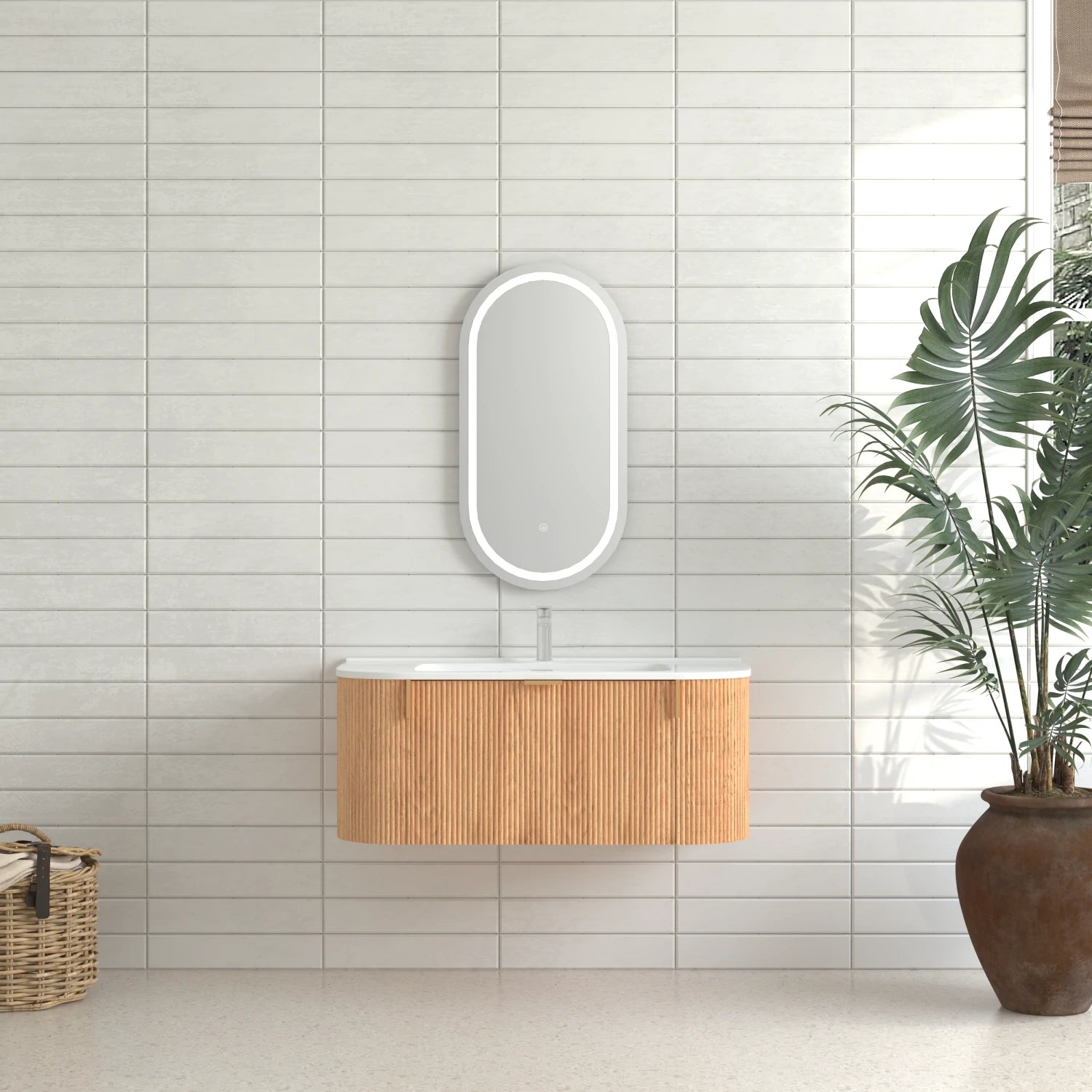
Bathroom Vanity Ideas for Small Bathrooms
Lead In
A small bathroom doesn't mean you have to sacrifice style, storage, or functionality. The right bathroom vanity can help you make better use of limited floor space while giving you enough room to store everyday essentials.
From floating and wall-mounted designs to narrow, corner, and compact vanities, there are plenty of options for making a small bathroom feel more spacious and organized. The key is choosing a vanity that fits your layout, storage needs, and personal style without overwhelming the room.
In this guide, we'll explore practical bathroom vanity ideas for small bathrooms, explain which vanity styles work best in compact spaces, and share tips for choosing the right size, configuration, and storage features.

1. Choose a Floating Vanity to Free Up Floor Space
A floating bathroom vanity is one of the most effective choices for a small bathroom. Unlike a traditional floor-mounted vanity, a floating vanity is attached directly to the wall, leaving open space underneath.
This exposed floor area creates a lighter, less crowded appearance and can make the bathroom feel larger than it actually is. It also makes cleaning the floor easier because there are fewer hard-to-reach areas underneath the cabinet.
Floating vanities work particularly well in modern, contemporary, and minimalist bathrooms. You can also use the space underneath for small baskets or bathroom accessories if additional storage is needed.
Before installing a floating vanity, make sure the wall and mounting system can support its weight. You should also consider the location of your plumbing and the desired height of the vanity.

2. Try a Narrow Bathroom Vanity
If your bathroom is long and narrow, a narrow vanity can make a significant difference.
A standard-depth vanity may take up too much walking space, particularly in a bathroom where the vanity is positioned directly across from a toilet, shower, or bathtub. A shallower vanity can provide the functionality you need without making the room feel cramped.
When choosing a narrow bathroom vanity, pay attention to both width and depth. A vanity with a smaller footprint can still provide useful storage if it uses drawers efficiently.
This option is particularly useful for:
- Narrow full bathrooms
- Small guest bathrooms
- Apartment bathrooms
- Hall bathrooms
- Bathrooms with limited walking space
The goal isn't simply to choose the smallest vanity available. Instead, choose the largest vanity that comfortably fits your available space while maintaining sufficient clearance around other fixtures.

3. Install a Corner Bathroom Vanity
Corners are often overlooked in small bathroom layouts. A corner vanity can turn this unused space into a functional area for washing and storage.
Corner bathroom vanities are especially useful when a conventional vanity would interfere with the toilet, shower, or bathroom entrance.
They can also work well in bathrooms with unusual layouts where wall space is limited.
However, corner vanities generally provide less countertop area than larger rectangular vanities. Before choosing one, consider how much countertop space and storage you actually need.
A corner vanity can be a smart solution when your priority is maximizing usable floor space rather than creating a large countertop.

4. Choose a Single-Sink Vanity
For most small bathrooms, a single-sink vanity is more practical than a double-sink vanity.
Double vanities are useful in larger bathrooms where two people need to use the sink at the same time. In a compact bathroom, however, a second sink can take up valuable countertop and cabinet space without providing enough additional benefit.
A single-sink vanity gives you more flexibility when working with a limited footprint. You can use the remaining space for drawers, cabinet storage, or additional countertop space.
If two people regularly share the bathroom, consider whether your actual need is two sinks or simply better organization. In many cases, a well-designed single vanity with efficient storage can provide everything a small bathroom needs.

5. Maximize Storage with Drawers
Storage is one of the biggest challenges in a small bathroom. Drawers can help you make better use of the space inside your vanity.
Unlike a large open cabinet, drawers allow you to organize toiletries, cosmetics, grooming products, and other essentials into separate areas. They also make frequently used items easier to access.
Consider a vanity with a combination of shallow and deep drawers. Shallow drawers can hold smaller items such as makeup and toothbrushes, while deeper drawers can accommodate towels, hair-care products, or larger bathroom accessories.
When evaluating a vanity, don't just look at the number of drawers. Check their actual usable depth, drawer configuration, hardware quality, and how much storage space they provide.

6. Use a Compact Vanity with Built-In Storage
A compact bathroom vanity can combine several essential functions into one piece of furniture: sink, countertop, cabinet, and storage.
This makes it an efficient choice when every inch of your bathroom matters.
Instead of using a separate sink and storage cabinet, a compact vanity provides a centralized solution. Look for designs that make efficient use of the cabinet interior and include adjustable shelves or drawers.
If your bathroom has limited floor space, avoid oversized decorative details that add visual bulk without providing additional functionality.
A simple cabinet with smart internal organization can often be more useful than a larger vanity with inefficient storage.

7. Consider an 18-, 24-, or 30-Inch Vanity
Vanity width is one of the most important factors when designing a small bathroom.
Compact bathroom vanities are commonly available in sizes such as 18, 24, and 30 inches wide. The right choice depends on your available wall space, bathroom layout, storage requirements, and clearance around other fixtures.
| Vanity Width | Best For | Storage Capacity |
|---|---|---|
| 18 inches | Very small bathrooms and powder rooms | Limited |
| 24 inches | Small bathrooms with limited space | Basic |
| 30 inches | Compact full bathrooms | Moderate |
| 36 inches | Larger small bathrooms | Good |
An 18-inch vanity is useful when space is extremely limited. A 24-inch vanity provides a little more countertop and storage space while remaining compact. A 30-inch vanity can be a good middle ground for a small full bathroom.
A 36-inch vanity may also work if your bathroom has enough floor and wall space.
Remember that vanity width is only one measurement. Always consider the vanity's depth and height as well as the clearance required around the sink, toilet, shower, bathtub, and door.
8. Choose a Wall-Mounted Vanity
A wall-mounted vanity is another excellent option for compact bathrooms.
Wall-mounted vanities are typically installed above the floor, creating an open area underneath the cabinet. This can make the room appear less crowded and can visually extend the floor area.
They can also make bathroom cleaning easier because you can clean underneath the vanity without moving furniture.
Wall-mounted vanities are particularly suitable for contemporary and minimalist designs. They can also provide flexibility when selecting the installation height.
However, installation requires secure wall support and careful attention to plumbing connections. If your bathroom wall cannot adequately support the vanity, a floor-mounted alternative may be more appropriate.

9. Choose a Light-Colored Vanity
Color can have a surprisingly strong effect on how a small bathroom feels.
Light-colored vanities, such as white, light gray, beige, and natural light wood finishes, can create a brighter and more open appearance.
A light vanity can also work well with other small-bathroom design elements such as:
- Light-colored walls
- Large mirrors
- Bright lighting
- Neutral flooring
- Glass shower doors
- Simple hardware
This doesn't mean dark vanities are unsuitable for small bathrooms. A dark vanity can create an attractive focal point, particularly when balanced with light walls and sufficient lighting.
The most important consideration is how the vanity finish works with the overall color scheme of the bathroom.
10. Use a Minimalist Vanity Design
A minimalist vanity can prevent a small bathroom from feeling visually crowded.
Look for clean cabinet lines, simple hardware, flat or subtly detailed doors, and a limited number of decorative elements.
In a compact bathroom, a highly ornate vanity can make the space feel smaller even if its physical dimensions are reasonable.
Minimalist designs work particularly well with:
- Modern bathrooms
- Contemporary bathrooms
- Scandinavian-inspired interiors
- Small apartment bathrooms
- Guest bathrooms
The idea is to reduce visual clutter while keeping the vanity functional.
A simple vanity doesn't have to look boring. You can add personality through the countertop, hardware, mirror, lighting, wall color, or decorative accessories.

11. Choose a Vanity with an Integrated Sink
An integrated sink combines the sink and countertop into one continuous unit.
This design can be particularly useful in a small bathroom because it creates a streamlined appearance and eliminates some of the visual separation between the sink and countertop.
Integrated sinks are also relatively easy to clean because there are fewer seams and edges where dirt and water can accumulate.
Compared with a countertop paired with a separate vessel sink, an integrated sink can create a lower-profile appearance and may be more practical when you need to maximize available space.
When choosing an integrated sink vanity, consider the basin size and countertop area. A very small sink may save space but could be less comfortable for everyday use.
12. Use a Mirrored or Glossy Vanity Finish
Reflective surfaces can help make a small bathroom feel brighter and more open.
A glossy vanity finish can reflect light around the room, while a large mirror above the vanity can create the perception of additional space.
However, glossy finishes aren't the only option. Natural wood and matte finishes can also look excellent in small bathrooms when paired with the right lighting and color palette.
If you choose a glossy vanity, remember that fingerprints, water spots, and dust may be more noticeable on some high-gloss surfaces. Regular cleaning may therefore be necessary to maintain its appearance.
13. Make Use of Vertical Storage
When floor space is limited, look upward.
Your bathroom walls can provide valuable storage without taking up additional floor area.
For example, you can combine a compact vanity with:
- A mirrored medicine cabinet
- Wall-mounted shelves
- Tall storage cabinets
- Open shelving
- Over-the-toilet storage
- Hooks and towel bars
This approach allows the vanity to remain relatively compact while additional storage is provided elsewhere in the room.
Vertical storage is especially useful when a small vanity doesn't have enough cabinet capacity for all of your bathroom essentials.
The key is to avoid covering every available wall with storage. Too many shelves or cabinets can make a small bathroom feel cluttered. Choose a few practical storage solutions and keep frequently used items organized.
14. Choose a Freestanding Vanity When You Need More Storage
Floating and wall-mounted vanities aren't the only choices for small bathrooms.
A freestanding bathroom vanity can be a better option when you need enclosed storage or prefer a traditional, transitional, or farmhouse-inspired design.
Freestanding vanities can provide substantial cabinet space without requiring wall mounting. They can also be easier to replace or reposition during certain renovation projects.
If you choose a freestanding vanity for a small bathroom, pay close attention to its depth and overall visual weight.
A compact freestanding vanity with a simple design can provide useful storage without overwhelming the room.
How to Choose the Right Vanity for a Small Bathroom
Finding the right vanity isn't simply about choosing the smallest model. You need to balance dimensions, storage, functionality, appearance, and the existing bathroom layout.
Measure Your Available Space
Before purchasing a vanity, measure the area carefully.
Measure:
- Available wall width
- Vanity depth
- Available height
- Distance to the toilet
- Distance to the shower or bathtub
- Door swing
- Drawer and cabinet clearance
- Available walking space
Don't rely solely on the dimensions shown on a product listing. Mark the proposed vanity footprint on the floor using painter's tape. This can give you a better idea of how much space the vanity will actually occupy.
Consider Vanity Depth
Depth can be just as important as width in a small bathroom.
A vanity that is relatively narrow but very deep may still make the room difficult to navigate.
If your bathroom has limited walking space, consider a shallower vanity. This can provide enough room for a sink and basic storage while preserving more usable floor area.
Think About Your Storage Needs
Consider what you actually need to store inside the vanity.
Ask yourself:
- How many people use the bathroom?
- Do you need space for cosmetics?
- Do you store hair-care products?
- Do you need room for towels?
- Do you keep cleaning supplies in the bathroom?
- Can wall storage provide additional capacity?
If your storage requirements are high, prioritize a vanity with drawers and efficient cabinet organization rather than simply choosing a vanity with a larger countertop.
Consider Plumbing Location
Existing plumbing can influence where your vanity can be installed.
If you're replacing an existing vanity without changing the bathroom layout, choosing a vanity that works with your current plumbing can simplify installation.
Major changes to plumbing may increase renovation time and costs, so consider the location of the drain and water supply lines before selecting a vanity.
Small Bathroom Vanity Size Guide
Choosing the right vanity size is one of the most important decisions for a compact bathroom.
An 18-inch vanity can work well in extremely small spaces or powder rooms. A 24-inch vanity provides more usable countertop and storage while maintaining a small footprint.
For a small full bathroom, a 30-inch vanity can offer a good balance between functionality and space efficiency. If your layout allows more room, a 36-inch vanity may provide additional storage without making the bathroom feel crowded.
However, there is no universal "best" vanity size. The ideal size depends on your specific bathroom layout.
Before ordering, measure the available space and consider the location of every surrounding fixture.
Common Mistakes to Avoid When Choosing a Small Bathroom Vanity
Choosing a Vanity That's Too Deep
A deep vanity can significantly reduce walking space. Always consider depth, not just width.
Ignoring Door and Drawer Clearance
A vanity may physically fit into the bathroom but still be impractical if drawers or cabinet doors cannot open properly.
Make sure there is enough space for doors and drawers to open without hitting the toilet, shower, bathtub, or bathroom entrance.
Prioritizing Appearance Over Storage
A beautiful vanity isn't particularly useful if it doesn't provide enough storage.
Think about your daily routine and choose a storage configuration that works for you.
Choosing a Double Vanity for a Very Small Bathroom
Two sinks may sound convenient, but a double vanity can consume valuable countertop and cabinet space.
For most compact bathrooms, a well-designed single vanity is more practical.
Forgetting About Plumbing
Check your existing plumbing before purchasing a vanity. The location of the drain and water supply can affect installation.
Not Measuring Before Ordering
Never estimate your available space.
Measure the bathroom carefully and check the manufacturer's actual product dimensions before ordering.
Making the Vanity Too Visually Heavy
A large, ornate, or extremely dark vanity can dominate a small bathroom.
If the room already contains several visual elements, consider a simpler vanity design.
How to Make a Small Bathroom Look Bigger
The vanity is only one part of the overall design. Several other choices can help create a more spacious appearance.
Use a Floating Vanity
Leaving part of the floor visible underneath the vanity can make the room feel more open.
Choose Light Colors
Light walls, flooring, and vanity finishes can help create a brighter atmosphere.
Install a Large Mirror
A large mirror can reflect light and visually expand the room.
Keep the Countertop Uncluttered
Avoid filling the vanity countertop with unnecessary products. Use drawers, cabinets, and wall storage to keep everyday items organized.
Use Consistent Finishes
Matching hardware, faucets, lighting, and other fixtures can create a more cohesive appearance.
Add Effective Lighting
Good lighting can make a small bathroom feel brighter and more comfortable. Consider combining general lighting with task lighting around the vanity.
Use Glass Shower Doors
If your bathroom includes a shower enclosure, clear glass shower doors can help maintain an unobstructed visual connection across the room.
Avoid Oversized Furniture
Choose furniture and accessories that are proportional to the bathroom. A small bathroom usually benefits from a few well-chosen pieces rather than too many large ones.
Frequently Asked Questions
What size vanity is best for a small bathroom?
For most small bathrooms, a 24- to 30-inch vanity offers a good balance of storage, countertop space, and floor clearance. Very compact bathrooms or powder rooms may benefit from an 18-inch vanity, while a 36-inch vanity can work when the layout provides enough space.
Is a floating vanity better for a small bathroom?
A floating vanity can be an excellent choice for a small bathroom because it leaves visible floor space underneath, creating a more open appearance. It can also make floor cleaning easier.
What is the smallest bathroom vanity size?
Compact bathroom vanities can be available in widths around 18 inches, although the exact dimensions vary by manufacturer. An 18-inch vanity is generally better suited to very small bathrooms and powder rooms where space is extremely limited.
How deep should a vanity be in a small bathroom?
The ideal vanity depth depends on the bathroom layout. A shallower vanity can be beneficial when walking space is limited, but you should still ensure that the sink and countertop are comfortable for everyday use.
Are wall-mounted vanities good for small bathrooms?
Yes. Wall-mounted vanities can work particularly well in compact bathrooms because they leave some floor area visible underneath and can create a lighter visual appearance.
How can I maximize storage in a small bathroom?
Choose a vanity with drawers or efficiently designed cabinets, then supplement it with vertical storage such as medicine cabinets, wall shelves, and tall storage units. Keeping frequently used items organized can also make a small bathroom feel less cluttered.
Should I choose drawers or cabinet doors for a small bathroom vanity?
Both can be useful. Drawers often make smaller items easier to organize and access, while cabinet doors can provide larger open storage areas for taller products. A combination of both can offer the greatest flexibility.
Is a single or double vanity better for a small bathroom?
A single vanity is usually the more practical choice for a small bathroom. It requires less space and leaves more room for storage and movement.
How do I make a small bathroom look bigger?
Use a space-efficient vanity, keep the room uncluttered, choose light colors, install a large mirror, improve lighting, and consider a floating vanity or clear shower enclosure to maintain an open visual appearance.
Final Thoughts
Choosing the right vanity can make a major difference in a small bathroom. The goal isn't simply to find the smallest possible cabinet but to find a vanity that makes efficient use of the available space while providing the storage and functionality you need.
Floating and wall-mounted vanities can help create a more open appearance, while narrow and corner vanities can solve challenging layouts. Single-sink designs are generally more practical than double vanities in compact spaces, and drawers can significantly improve everyday organization.
Before making a purchase, carefully measure your bathroom, consider vanity width and depth, check clearance around other fixtures, and think about your actual storage requirements.
With the right combination of size, layout, storage, and design, even a small bathroom can be comfortable, functional, and stylish.
Featured Products


AISU 36" Bathroom Vanity with Sink, Wall-Mounted Floating Plywood Bathroom Storage Cabinet with 2 Drawers, White Ceramic Basin, NO Faucet, Pre-assembled, Natural Woodgrain Color
- $742.41
- $742.41
- Unit price
- per


AISU 30" Bathroom Vanity with Sink, Wall-Mounted Floating Plywood Bathroom Storage Cabinet with 2 Drawers, White Ceramic Basin, NO Faucet, Pre-assembled, Retro Walnut Woodgrain Color
- $558.56
- $558.56
- Unit price
- per


AISU 30" Bathroom Vanity with Sink, Wall-Mounted Floating Plywood Bathroom Storage Cabinet with 2 Drawers, Carrara White Basin, NO Faucet, Pre-assembled, Retro Walnut Woodgrain Color
- $582.67
- $582.67
- Unit price
- per


AISU 30" Bathroom Vanity with Sink, Wall-Mounted Floating Plywood Striped Bathroom Storage Cabinet with 2 Drawers, White Rectangle Ceramic Basin, NO Faucet, Pre-assembled, Natural Woodgrain Color
- $554.67
- $554.67
- Unit price
- per


AISU 36" Bathroom Vanity with Sink, Wall-Mounted Floating Plywood Bathroom Storage Cabinet with 2 Drawers, White Ceramic Basin, NO Faucet, Pre-assembled, Retro Walnut Woodgrain Color
- $742.41
- $742.41
- Unit price
- per


AISU 24" Bathroom Vanity with Sink, Wall-Mounted Floating Plywood Striped Bathroom Storage Cabinet with 2 Drawers, White Rectangle Ceramic Basin, NO Faucet, Pre-assembled, Natural Woodgrain Color
- $519.25
- $519.25
- Unit price
- per


AISU 24" Bathroom Vanity with Sink, Wall-Mounted Floating Plywood Bathroom Storage Cabinet with 2 Drawers, White Ceramic Basin, NO Faucet, Pre-assembled, Retro Walnut Woodgrain Color
- $521.01
- $521.01
- Unit price
- per


AISU 36" Bathroom Vanity&Sink, Floating Stripe Plywood Storage Cabinet with 2 Drawers, Carrara White Sintered Stone Hot-bent Integrated Rectangle Basin, Pre-assembled, Retro Walnut Woodgrain Color
- $667.09
- $667.09
- Unit price
- per


AISU 48" Wall-Mounted Brown Oak Plywood Cabinet and Carrara White Sintered Stone Countertop, NO Basin, NO Faucet and Sink Cove
- $430.00
- $430.00
- Unit price
- per


AISU 36" Bathroom Vanity&Sink, Floating Plywood Storage Cabinet, Twill Double Doors with Metal Trim, Marble Pattern Ceramic Vessel Basin&Carrara White Sintered Stone Top, Brown Oak Woodgrain Color
- $519.15
- $519.15
- Unit price
- per


AISU 48" Bathroom Vanity&Sink, Floating Plywood Storage Cabinet, Twill Double Doors with Metal Trim, Transparent Round Glass Vessl Basin&Carrara White Sintered Stone Top, Brown Oak Woodgrain Color
- $592.62
- $592.62
- Unit price
- per


AISU 24" Bathroom Vanity&Sink, Floating Plywood Storage Cabinet, Twill Double Doors with Metal Trim, Transparent Round Glass Vessl Basin&Carrara White Sintered Stone Top, Brown Oak Woodgrain Color
- $472.88
- $472.88
- Unit price
- per


AISU 48" Bathroom Vanity&Sink, Floating Plywood Storage Cabinet, Twill Double Doors with Metal Trim, Marble Pattern Ceramic Vessel Basin&Carrara White Sintered Stone Top, Brown Oak Woodgrain Color
- $597.06
- $597.06
- Unit price
- per


AISU 24" Bathroom Vanity&Sink, Floating Plywood Storage Cabinet, Twill Double Doors with Metal Trim, Matte Stone Pattern White Bowl Ceramic Vessel Basin&Sintered Stone Top, Brown Oak Woodgrain Color
- $459.71
- $459.71
- Unit price
- per


AISU 48" Bathroom Vanity&Sink, Floating Plywood Storage Cabinet, Twill Double Doors with Metal Trim, Stone Pattern White Bowl Ceramic Vessel Basin&Sintered Stone Top, Brown Oak Woodgrain Color
- $579.45
- $579.45
- Unit price
- per